Bring a Trailer Auctions
- 4.9
- Rating
- 50.00K
- Installs
- Free
- Price

 Analysis by App-foxy
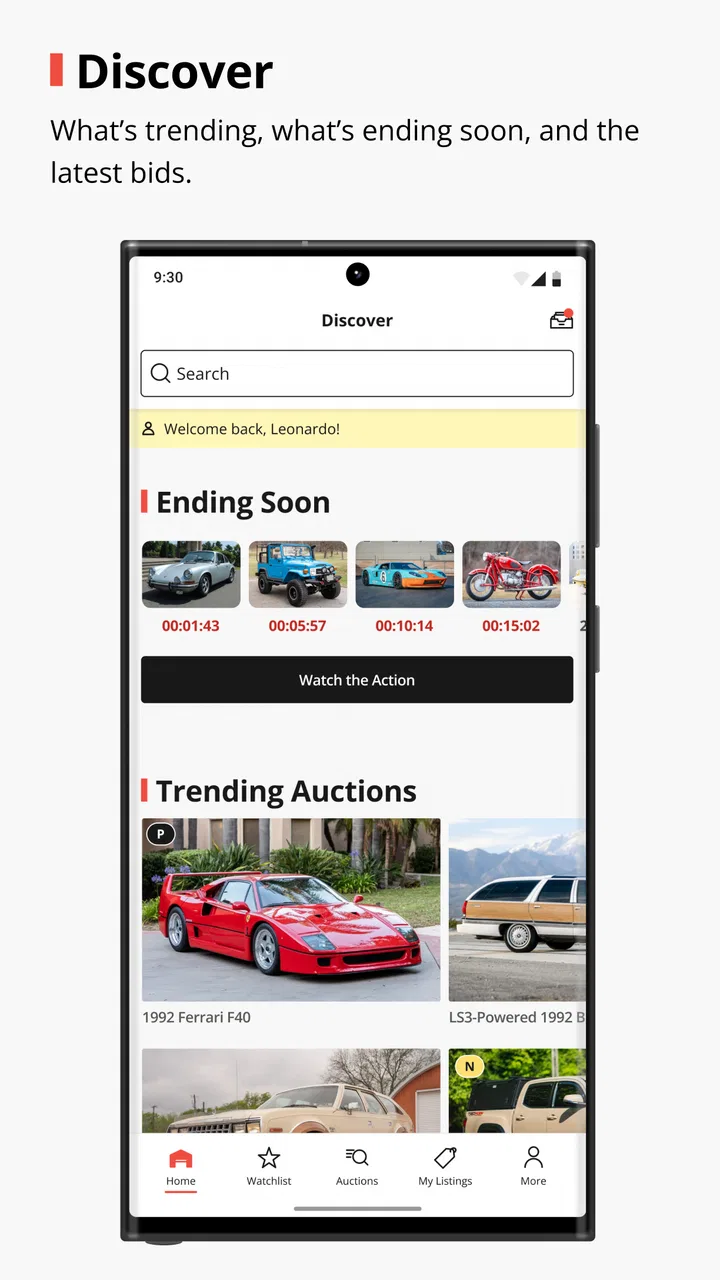
I approached Bring a Trailer Auctions as a daily browsing tool rather than just another place to look at expensive cars. That distinction matters. The app is built for people who enjoy classic, collector, and enthusiast vehicles, but its real value appears when you use it with a clear routine: scan new listings, study the details, follow conversations, and decide whether a vehicle deserves serious attention. I found it much more useful for focused research than for casual scrolling.
It is a free Auto & Vehicles app from Bring a Trailer Auctions, with an Everyone age rating, and it runs on Android devices using Android 7.0 or later. The current version is 1.3.12-0. Its audience is already fairly clear from the subject matter: this is not a general classifieds app for finding an ordinary commuter car. It is aimed at people who care about provenance, condition, originality, modifications, unusual specifications, and the stories behind enthusiast vehicles.
The app has earned a 4.8 average from around 1,500 ratings and has passed 50,000 installs. Those figures suggest a focused community rather than a mass-market shopping platform. I think that is important context because the experience feels centered on discovery and discussion, not on presenting endless anonymous inventory.
You May Also Like

 Google Keep - Notes and lists
Google Keep’s Quiet Growth Shows the Appeal of Simpler Notes
As mobile work gets busier, Google Keep keeps winning a simple contest: capture a thought quickly, find it later, and get on with the day.

 Blood Strike: 2.5 Anniversary
Blood Strike’s Loadouts Turn Every Drop Into a Tactical Gamble
A close look at Blood Strike’s custom loadouts: how fast access to signature weapons reshapes its battle royale rhythm, rewards preparation, and narrows the gap between fights.

 Pandora - Music & Podcasts
Pandora’s Music Is Easy to Start, but Harder to Recover
Pandora’s strength is its low-effort path from a seed to a station. Its weak spot is how much confidence it asks you to place in connection, setup, and quiet recovery.

 8 Ball Pool
 Is Built on Rivalries, Rematches, and Routine
A close look at the rivalries, rematches, shared routines, and unanswered safety questions that turn a quick pool match into a persistent mobile community.

 Samsung Music
’s Quiet Strength Is Playing What You Already Own
Its reach comes less from spectacle than from dependable access to a personal library. That simplicity is both the app’s strongest retention engine and its ceiling.

 AccuWeather: Weather Radar
AccuWeather Review: A Quick, Clear Forecast for Everyday Decisions
For everyday plans, the best forecast is the one you can understand quickly. AccuWeather makes rain timing, radar, and local conditions easy to act on, with a few trade-offs.
More From Our News Desk



How I built a reliable browsing routine
My first mistake was treating the app like a simple catalog. I opened it, looked at attractive photographs, and moved on. That works for entertainment, but it is a poor way to evaluate a collector vehicle. A better baseline workflow begins with a question: am I browsing for inspiration, researching a model, watching an auction, or considering a purchase? Each goal calls for a different level of attention.
For casual discovery, I would start with the newest listings and use the first pass only to identify vehicles worth revisiting. I would not try to read every description immediately. Instead, I would note the model, apparent condition, location details shown in the listing, and whether the vehicle matches my interests. This keeps the first session quick and prevents a polished photo set from taking over the decision.
For research, I would open a listing and read it from top to bottom, then return to the images with the written details in mind. That order is useful because photographs can make a vehicle feel complete before you have considered ownership history, mechanical work, modifications, or known imperfections. The app works best when you treat the listing as a case file rather than a gallery.
The discussion around a listing also deserves a deliberate pass. Enthusiast communities often notice details that a quick viewer misses, especially when a vehicle has been modified or restored. I would read comments after forming my own initial impression, not before. That helps me distinguish useful observations from the emotional excitement that naturally surrounds an unusual car.
A realistic everyday scenario would be researching a weekend car during a lunch break. I might spend five minutes scanning current listings, save the names of two or three candidates outside the app, and return later with a checklist. In the second session, I would compare the description with the images, inspect the questions and answers, and decide whether the listing deserves a deeper mechanical or financial investigation. This two-stage habit is more practical than trying to make a buying decision during one burst of browsing.
What I look for before becoming interested
I pay attention to consistency. Do the written description and photographs tell the same story? Does the visible wear fit the claimed use? Are modifications explained clearly enough to understand what has changed? A beautiful vehicle can still be a poor fit if its specification is difficult to maintain, its restoration quality is uncertain, or its history does not match what I want.
One useful habit is to separate attraction from suitability. The app is very good at showing vehicles with personality, and that can make an impractical purchase feel reasonable. I would write down the intended use before becoming emotionally attached: occasional drives, shows, collecting, mechanical learning, or long-distance touring. A car that is perfect for one purpose may be frustrating for another.
I also avoid judging a listing by a single photograph. Images can reveal broad condition, but they do not replace an inspection, a conversation with a knowledgeable specialist, or a careful review of the vehicle’s documentation. The app is a strong starting point for narrowing choices; it is not a substitute for due diligence before spending money.
Settings, shortcuts, and repeatable habits that matter
There is no benefit in pretending that every app has a deep settings system. With this one, I would begin with the practical basics: make sure the app is updated, keep notifications under control, and use the device’s normal Android notification settings if alerts become distracting. The goal is to make auction activity useful without allowing every update to interrupt the day.
I prefer notifications that support a specific intention. If I am actively following a vehicle, timely alerts can help me return to the listing when something changes. If I am only browsing for ideas, constant alerts can turn the app into noise. I would therefore enable attention for a small set of genuinely relevant listings and silence broader interruptions at the operating-system level when necessary.
Another setting worth checking is the app’s behavior on your particular device: text size, display brightness, and whether images load comfortably on your connection. Detailed vehicle photography is central to the experience, so a small-screen phone or a weak mobile connection can make inspection tiring. I found that a larger display is better for comparing details, while a phone remains convenient for quick discovery and comment reading.
A simple shortcut is to keep a separate note for vehicles you may want to revisit. I would record the model, the reason it caught my attention, questions that remain unanswered, and the date of my last review. This is especially helpful because visual memory is unreliable. After looking at several similar cars, it is easy to confuse one restoration, engine specification, or interior condition with another.
I also recommend using a fixed checklist instead of relying on enthusiasm. My version includes originality, quality of visible work, parts availability, intended use, known maintenance concerns, and whether the discussion raises questions that the listing does not resolve. The checklist does not need to be complicated. Its purpose is to make every vehicle pass through the same mental filter.
How to make the app useful without overusing it
I would divide sessions into three types. A discovery session is short and visual. A research session is slower and focused on one vehicle or model. A monitoring session returns to listings already under consideration. Mixing all three together encourages endless browsing, while separating them creates a repeatable workflow.
For discovery, I would avoid opening every attractive listing. I would select only the vehicles that match a defined interest, such as a particular era, body style, or mechanical character. For research, I would read carefully and write down questions. For monitoring, I would check whether new discussion changes my view rather than simply refreshing because the listing is exciting.
This approach also helps with the app’s emotional pull. Collector vehicles invite daydreaming, and the photographs are designed to make that easy. A written shortlist turns the experience from passive consumption into useful research. It also makes it easier to admit that a vehicle is interesting but not right for me.
One non-obvious trade-off is that focusing too narrowly can hide unexpected opportunities. If I only search mentally for one exact model, I may overlook a less obvious vehicle that better suits my budget, storage situation, or driving plans. I would keep one broad discovery session alongside focused research, but I would not let the broad session replace the checklist.
Faster patterns for comparing listings and conversations
The fastest useful pattern is a two-pass review. In the first pass, I check whether the vehicle fits my basic criteria. In the second, I investigate the details that could change the decision. This is quicker and more reliable than reading every word of every listing from the beginning.
During the first pass, I look for the vehicle’s identity, overall presentation, apparent condition, and the kind of ownership it seems to require. I also ask whether the listing is relevant to my actual goals. If I want a car to drive regularly, a highly specialized example may not be the best choice even if it is visually impressive.
During the second pass, I compare claims with evidence. If the description emphasizes restoration, I look for photographs that show the quality and extent of that work. If it highlights originality, I consider whether the visible specification appears coherent. If modifications are central to the appeal, I think about future maintenance and whether those changes improve the car for my intended use or simply make it more distinctive.
When reading comments, I sort questions into three groups: questions answered clearly, questions answered partially, and questions that remain important. That classification is more useful than counting comments or assuming that a busy discussion automatically means a better vehicle. A quiet listing can still be worth attention, while a lively one can contain mostly enthusiasm rather than actionable information.
Another efficient habit is to compare vehicles by risk, not just by appearance. I would ask which candidate has the clearest story, the most understandable condition, and the fewest unresolved issues. This does not mean choosing the least exciting car. It means recognizing that excitement and confidence are different things.
If I were helping a friend use the app, I would suggest taking screenshots or notes only after identifying a real reason to keep a listing. Saving everything creates a personal archive that is difficult to review. A short, disciplined shortlist is more valuable than a large collection of attractive images.
Where the app beats ordinary alternatives
Compared with general classifieds, this app feels more suitable for enthusiast research because the subject matter is concentrated. A broad marketplace may be better for finding a practical used car, comparing everyday prices, or contacting local sellers quickly. Bring a Trailer Auctions is more appealing when the vehicle’s character and history matter as much as basic transportation.
Compared with social media, the app offers a more direct connection between the vehicle and the surrounding discussion. Social platforms are excellent for community discovery, but their feeds can be unpredictable and quickly bury useful context. Here, the listing remains the center of attention, which makes it easier to return to the same vehicle and continue evaluating it.
Compared with a traditional auction website, the enthusiast focus is the main attraction. I would choose this app when I want to understand why a vehicle matters to people who care about its design, history, specification, or modifications. I would choose a general auction service when I need a broader range of goods or a purchasing workflow designed for ordinary transactions rather than collector vehicles.
Advanced limits that should shape your expectations
The app cannot remove the risks of buying an older or unusual vehicle. A listing can help me discover a promising candidate, but it cannot turn photographs and comments into a complete mechanical inspection. Anyone considering a serious purchase should still think about an independent inspection, transport, registration, insurance, storage, parts, and ongoing maintenance.
This is also not the right tool for someone who simply wants the cheapest dependable transportation. The enthusiast focus may encourage interest in vehicles that need specialist knowledge, careful sourcing, or more patience than a normal daily driver. If reliability, predictable running costs, and local availability are the only priorities, a conventional used-car marketplace will usually be a better match.
Another limitation is the gap between online confidence and physical reality. Images can show many useful details, but they do not communicate every noise, smell, vibration, panel alignment issue, or mechanical behavior. Even a detailed discussion can leave important questions unanswered. I treat the app as a research layer before a real-world decision, never as the complete decision itself.
The community aspect is valuable, but it requires judgment. Enthusiasts can provide sharp observations, yet opinions may differ because people value originality, performance, aesthetics, and usability in different ways. I would not accept a comment simply because it sounds authoritative. I would look for explanations, compare several viewpoints, and separate technical evidence from personal preference.
There is also a practical limitation for users who dislike auction pressure. The app is designed around vehicles that attract attention and discussion, so the experience can encourage urgency. If I notice that I am checking a listing repeatedly without learning anything new, I step away and return to my written criteria. A pause is often more useful than another refresh.
Privacy and comfort matter in ordinary use as well. I would review notification behavior and avoid granting more attention than the app deserves. I would also be cautious about treating public discussion as a replacement for direct verification. The strongest workflow combines the app’s discovery tools with private notes, specialist advice, and a clear spending limit.
Who should use it and who should skip it
I recommend it to collectors, restorers, marque enthusiasts, design-minded drivers, and curious buyers who enjoy studying vehicles before deciding whether to pursue them. It is especially useful for someone who wants a concentrated stream of distinctive cars rather than a large database of ordinary listings.
I would also recommend it to a beginner who is willing to learn, provided that beginner understands the difference between discovering a vehicle and buying one safely. The app can teach you what kinds of details enthusiasts discuss and help you build better questions. It should not encourage a first-time buyer to skip inspection or budget planning.
I would skip it if my goal were a local commuter, a quick private sale, or a simple price comparison across everyday vehicles. I would also skip it if auction-style browsing tends to make me spend impulsively. In those cases, a more practical classifieds app, a dealer platform, or a local specialist may serve the purpose better.
My mastery verdict after using it as a research tool
My strongest impression is that this app rewards habits more than frantic browsing. The people who get the most from it will probably not be the ones who open every listing. They will be the ones who define a purpose, narrow the field, read carefully, and return with specific questions.
I would use it in a repeatable cycle: discover a small group of vehicles, select one or two for close reading, examine the discussion, record unresolved issues, and then step away before making any financial decision. That cycle turns an attractive stream of collector cars into something genuinely useful for research.
The free price makes experimenting easy, and the Everyone rating makes it broadly accessible from a content perspective. Its Android compatibility reaches older devices as well, although the comfort of inspecting detailed photographs will depend on the screen and connection you use. The current release, 1.3.12-0, is the version I would keep installed if I wanted the most current app experience.
I like the app because it combines visual discovery with a focused enthusiast context. I do not like the possibility of confusing a compelling presentation with a complete evaluation. That tension is not a flaw unique to this service; it is the central challenge of online collector-car shopping. The app handles discovery well, but the user still has to supply skepticism and patience.
My recommendation is straightforward: use Bring a Trailer Auctions as a disciplined starting point for finding and understanding interesting vehicles, not as permission to skip real-world verification. If you enjoy classic and enthusiast cars, want to follow thoughtful discussions, and are comfortable doing additional research, it is an appealing addition to your phone. If you need ordinary transportation or a frictionless local purchase, choose a more general alternative instead.
FAQs for Bring a Trailer Auctions
01What is Bring a Trailer Auctions and how does it work?
Bring a Trailer Auctions is an app designed for enthusiasts to buy and sell unique and classic vehicles. Users can browse auctions, place bids, and interact with sellers. The app offers detailed listings, including vehicle history and high-quality images, ensuring transparency and facilitating informed purchasing decisions.
02Is Bring a Trailer Auctions free to use, or are there any fees involved?
Browsing and participating in auctions is free. However, if you win an auction, a buyer's fee is applied, which is a percentage of the final bid. Sellers are also charged a listing fee when they post a vehicle for auction. These fees help maintain the platform and ensure quality service.
03How can I ensure the legitimacy of the vehicles listed on Bring a Trailer Auctions?
Bring a Trailer Auctions prioritizes transparency. Each listing includes detailed information, including the vehicle's history, condition, and high-resolution photos. Users can ask questions directly to the seller and view comments from the community, which often highlight important details or concerns.
04What features does Bring a Trailer Auctions offer to enhance user experience?
The app offers several features to enhance user experience, including a user-friendly interface, detailed search filters, and real-time auction updates. Users can also set notifications for auctions they're interested in and engage with a knowledgeable community through comments and discussions.
05Can I use Bring a Trailer Auctions internationally, or is it restricted to certain regions?
Bring a Trailer Auctions primarily operates in the United States, but international users can browse and participate in auctions. Shipping logistics and costs are the responsibility of the buyer, so international users should consider these factors when bidding on vehicles.
Pros
- Wide variety of vehicle listings.
- Active community with expert insights.
- User-friendly interface for easy browsing.
- Detailed vehicle descriptions and history.
- Integrated bidding system for convenience.
Cons
- High competition can raise final prices.
- Limited to auction-style sales only.
- Some vehicles may have hidden issues.
- No real-time customer support chat.
- App notifications can be overwhelming.

Bring a Trailer Auctions
Gallery